
Driving
Driving in Costa Rica: Roads, Tolls, Fuel, Night Driving & Safety
Driving in Costa Rica gives travelers the freedom to explore beaches, volcanoes and small towns at their own pace. Learn what to expect from roads, tolls, fuel stations, navigation, rainy-season conditions and night driving.
By Natural Car Rental · 9 min read · Updated 8/5/2026
At a glance
- Region
- Nationwide
- Road type
- Paved highways, secondary roads and occasional unpaved access roads
- 4x4 recommended
- No
- Vehicle
- A regular car or standard SUV is suitable for many established tourist routes.
- Best season
- Year-round, with extra travel time recommended during the rainy season
- Family friendly
- Yes
- Popularity
- Essential planning guide
Is driving in Costa Rica a good idea?
For many travelers, renting a car is one of the easiest ways to explore Costa Rica. A vehicle gives you the flexibility to visit beaches, volcanoes, national parks and smaller communities without depending entirely on fixed transportation schedules.
Driving in Costa Rica is manageable, but travel times can be longer than the distance suggests. Mountain roads, one-lane bridges, rain, road construction, traffic and slower vehicles can all affect a route. The best approach is to plan conservatively, avoid rushing and choose a vehicle that matches the places you intend to visit.
What are roads like in Costa Rica?
Costa Rica has a mixture of modern highways, urban roads, winding mountain routes, rural roads and unpaved access roads. Main connections between major cities and popular destinations are usually paved, but road width and surface quality can change quickly outside the principal routes.
A route shown as short on a map may include steep hills, sharp curves, narrow bridges or sections where traffic moves slowly. Always judge a journey by expected driving time rather than distance alone.
Main highways
Major highways connect the Central Valley with the Pacific coast, Guanacaste, the Caribbean and the southern region. Conditions are generally easier than on rural routes, but congestion can be significant around San José, Alajuela, Heredia and other busy areas.
Secondary and rural roads
Secondary roads may be narrower and may include potholes, limited shoulders, pedestrians, bicycles, motorcycles, animals or agricultural vehicles. Reduce speed and remain alert, especially near towns and schools.
Unpaved access roads
Some beaches, lodges, farms and remote attractions require travel on gravel or unpaved roads. Conditions can change during periods of heavy rain. Confirm the final section of the route before starting the trip and ask whether a higher-clearance vehicle is recommended.
Do you need a 4x4 in Costa Rica?
A 4x4 is not necessary for every Costa Rica itinerary. Travelers staying on major routes between places such as San José, Jacó, Manuel Antonio, La Fortuna and many parts of Guanacaste can often travel comfortably in a regular car or SUV.
A 4x4 or higher-clearance SUV may be advisable when visiting remote beaches, mountain lodges, rural properties or destinations reached by rough and steep roads. The correct choice depends on the exact route, season and accommodation location rather than the destination name alone.
Before reserving, share your complete itinerary with the rental company. A local recommendation based on the actual hotels and roads is more useful than choosing only by vehicle appearance.
Driving during the rainy season
Costa Rica’s rainy season can bring intense afternoon or evening showers. Rain may reduce visibility, create standing water, increase braking distance and affect unpaved roads.
- Allow additional time for every journey.
- Use headlights when visibility is reduced.
- Reduce speed before curves and bridges.
- Avoid driving through water when the depth or road surface is uncertain.
- Do not follow another vehicle through a flooded section as proof that it is safe.
- Check local conditions before traveling to remote areas.
If weather conditions become uncomfortable, stop in a safe, visible location and wait for the rain to ease.
Should tourists drive at night?
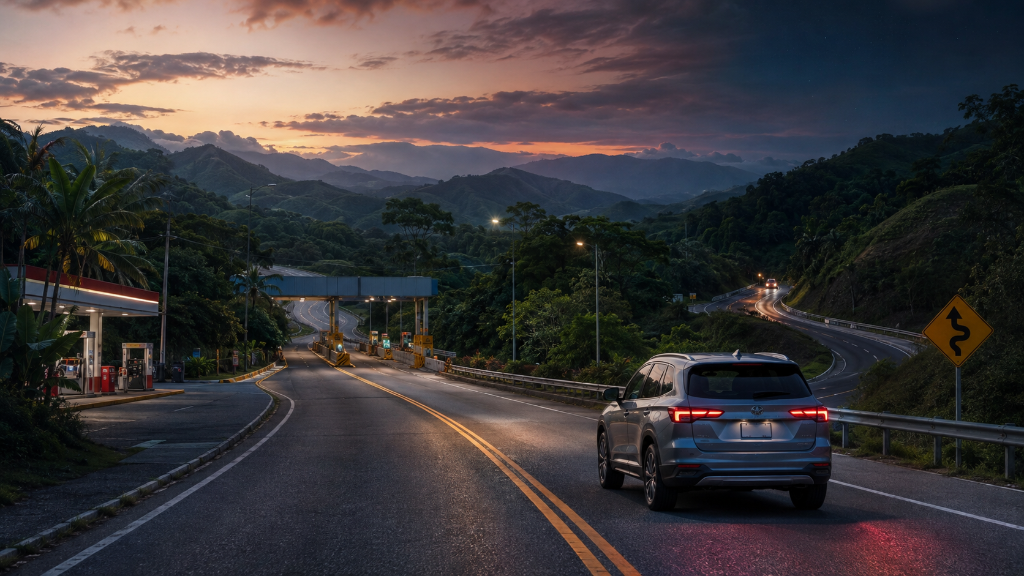
Night driving is possible, but it requires more caution. Outside major urban areas, some roads have limited lighting, fewer visible signs and unexpected pedestrians, cyclists, animals or road hazards.
Whenever practical, plan longer journeys during daylight. This is especially important on your arrival day, when you may be tired, unfamiliar with the vehicle and still learning the route.
If your flight arrives late and your destination requires several hours of driving through mountain or rural roads, staying near the airport and leaving early the following morning may provide a more comfortable start to the trip.
Tolls in Costa Rica
Some highways in Costa Rica have toll stations. Toll amounts and payment arrangements can change, so carry a small amount of Costa Rican colones and do not depend entirely on a single payment method.
Keep cash in an accessible but secure place before approaching the booth. Avoid searching through bags or wallets while stopped in traffic.
Fuel stations and refueling
Fuel stations are available throughout the country, but they may be farther apart in remote areas. Refuel before entering rural regions or beginning a long mountain route.
Fuel is sold by the liter. Confirm the fuel type required by the rental company before leaving the office and never assume based only on the vehicle model.
Natural Car Rental vehicles generally use gasoline unless the specific vehicle is identified as diesel. Always follow the fuel instructions provided with your rental agreement.
- Check the pump display before fueling begins.
- Confirm the requested fuel type.
- Keep the receipt.
- Return the vehicle with the fuel level required by the rental agreement.
Fuel prices are regulated nationally and may change, so avoid relying on an old price found in a travel article.
Navigation: Waze, Google Maps and road signs
Navigation applications are extremely helpful in Costa Rica, but they should not replace local route advice. A map application may choose a shorter rural road that is slower, rougher or unsuitable for the rented vehicle.
Before leaving, compare the route with the recommendation provided by the rental company, hotel or local host. Download offline map areas when possible in case mobile coverage becomes limited.
- Enter the exact hotel or attraction rather than only the town.
- Review the complete route before starting.
- Avoid accepting an unexpected shortcut without checking the road.
- Use a phone holder instead of handling the device while driving.
- Ask a passenger to manage navigation whenever possible.
One-lane bridges
One-lane bridges are common on some routes. Traffic signs normally indicate which direction has priority. Slow down, observe approaching vehicles and cross only when the bridge is clear.
Even when you have priority, confirm that the other driver is stopping before entering.
Parking and protecting your belongings
Use official parking areas or supervised parking whenever available. Do not leave passports, electronics, luggage or other valuable items visible inside the vehicle.
At beaches, trailheads and attractions, take essential belongings with you or keep them completely out of sight before arriving. Moving valuables into the trunk after parking can attract unnecessary attention.
Police stops and traffic incidents
Remain calm and follow the instructions of traffic officers. Carry your original driver’s license, passport or accepted identification, rental agreement and any documents supplied with the vehicle.
In an emergency, call 9-1-1 and contact the rental company as soon as it is safe. Do not accept informal roadside arrangements after a collision without first following the instructions provided in the rental agreement.
Documents to carry
Travelers should carry their valid original driver’s license, identification and rental agreement. Entry status, license language and other circumstances may affect individual requirements, so confirm the current rules before traveling.
Photographs or digital copies can be useful as backups, but they should not replace the original documents required for driving and vehicle rental.
How long should you allow for driving?
Avoid building an itinerary based only on the number of kilometers. Add time for meals, fuel, traffic, rain, viewpoints, roadwork and slower sections.
A relaxed itinerary is usually more enjoyable than changing hotels every day. When possible, schedule fewer long drives and spend more time experiencing each destination.
Essential driving checklist
- Confirm the correct fuel type.
- Inspect the vehicle before leaving.
- Save the rental company’s contact information.
- Download the route before departure.
- Carry some Costa Rican colones.
- Plan long journeys during daylight.
- Allow extra time during rain.
- Keep valuables out of sight.
- Ask for route-specific vehicle advice.
- Call 9-1-1 in an emergency.
Final advice
Driving in Costa Rica is less about speed and more about planning. Choose the right vehicle, begin long routes early, remain flexible and ask local questions before traveling into unfamiliar areas.
With realistic driving times and a route suited to your vehicle, a rental car can become one of the most useful parts of your Costa Rica experience.
Important information
Costa Rica driving times are often longer than the distance suggests. Mountain roads, rain, traffic, one-lane bridges and road construction can affect the journey. Plan with extra time and confirm the route before leaving.
How to get there
Use navigation as a guide, but compare it with local route advice before accepting shortcuts. Enter the exact hotel or attraction, download offline maps and confirm whether the final access road requires higher clearance or four-wheel drive.
Recommended time
Plan long transfers during daylight whenever possible. Add extra time during the rainy season and avoid scheduling an important activity immediately after a long drive.
VEHICLE GUIDANCE
Recommended vehicle
A regular car or standard SUV is suitable for many established tourist routes. Choose a higher-clearance SUV or 4x4 when the itinerary includes steep, rough, remote or unpaved access roads. Confirm the exact hotels and destinations before selecting the vehicle.
Explore the public fleet →NATURAL LOCAL ADVICE
Plan the road, not only the destination
Two travelers can visit the same destination but require different vehicles because their hotels use different access roads. Send us your complete itinerary before arrival and we can help you evaluate the route, expected driving time and appropriate vehicle category.
Begin long routes early, keep fuel above one-quarter tank in remote areas and ask about the final road to every hotel rather than checking only the destination town.
Avoid unfamiliar mountain or rural routes after dark whenever possible. Never cross moving water or enter a road that appears closed, flooded or unsafe.
Frequently asked questions
PLAN YOUR ROUTE
Build your Costa Rica itinerary
Use this guide to shape a more confident road trip across Costa Rica.
Ready to plan your rental?
Start on the home page to choose your dates, times and locations.
Go to bookingRelated guides
Vehicle Guides
Rental-Car Handover Checklist: Controls, Photos, Fuel & Return Details
Use a calm handover routine to understand your Costa Rica rental, record its condition and leave with the right route and return instructions.
By Natural Car Rental
Read guide
Airports
Your First Hour After Costa Rica Airport Arrivals: A Practical Checklist
Organize the steps after landing: baggage, connectivity, pickup instructions, documents and a calm handover before the first drive.
By Natural Car Rental
Read guideDriving
Costa Rica Driving Times: How to Build Realistic Transfer Days
Build a Costa Rica itinerary around realistic transfer days, with time for road conditions, breaks, parking and hotel access.
By Natural Car Rental
Read guide